Thought Leadership Sought in College Athletics

I get it.  Eat or be eaten, or worse yet, left for dead.  That doesn’t mean I have to like it, nor does it mean that what is going on in the world of college athletic conferences is a good thing.

My beloved ACC has just added Syracuse and Pittsburgh to its roster pulling two Big East stalwarts from that now reeling conference.  Expectations are that the ACC is still on a buying binge with lots of potential interest.  The Pac-12’s Larry Scott, who along with Jim Delaney of the Big 10-and-then-some conference, have to date been the agenda setters.  And, they’ve had the muscle to be those guys.  The University of Texas flexed its muscles with its own network and has basically sent the future of the Big 12 into a tailspin.

I might just be old fashioned, but it seems that all of the problems that continue to surface within college sports are likely to be exacerbated by this arms race. How does more money in the conference and athletic department coffers address the problems, such as whether athletes should be paid (and if so, which ones) or how many scholarships a Division I – FBS should receive?

Beyond those questions that many will argue on moral grounds, I feel we’re allowing football primarily to decimate an otherwise positive brand of college athletics.  I’ve written about the topic on several occasions, including this entry in DeepThoughts, “College Sports As a Marketing Vehicle”.   From my perspective, conference sponsorship in the age of far-flung alignment is a silly investment.  There is no regional footprint to market around.  Buy the advertising or do local deals with individual schools and call it a day. We all know the money is coming from TV.  But, what’s good for the coffers doesn’t mean it’s great for the brand.  And, while the war rages for the top programs, the mission of what college athletics is supposed to be about becomes even more blurry.

What is needed is some serious thought leadership.  You’d think the NCAA might have something to say about the matter, but president Mark Emmert is punting.  “When it comes to conference affiliations, that’s always been—and I suspect will always remain—decisions that are going to be made by university presidents,” Emmert said in a quote carried by USA Today yesterday.  Technically, he’s right, and I recognize it’s difficult for him to favor one horse over another.  But with scandals at Ohio State, Miami and even USC still very fresh, what is occurring on the business side of college athletics needs to be addressed by the person entrusted with keeping the college athletics mission relevant.

We need a discussion that involves college presidents, the NCAA, conference commissioners and perhaps some outside thought leadership to help move this debate toward actionable ideas that save a great thing from itself.

That said…GO DEACS (and Hawkeyes, and Golden Eagles/Warriors, and…)

dp

Update:  In an interesting, and I believe, positive development that occurred after this posting, Pac-12 commissioner, Larry Scott, told Texas that the Pac-12 would not be inviting Texas to the West Coast club over disagreements of how to split Longhorn Network revenue.  Nicely done Commissioner!

Tags: , , ,

8 Responses to “Thought Leadership Sought in College Athletics”

  1. Tato says:

    Hey Mr. Paro!

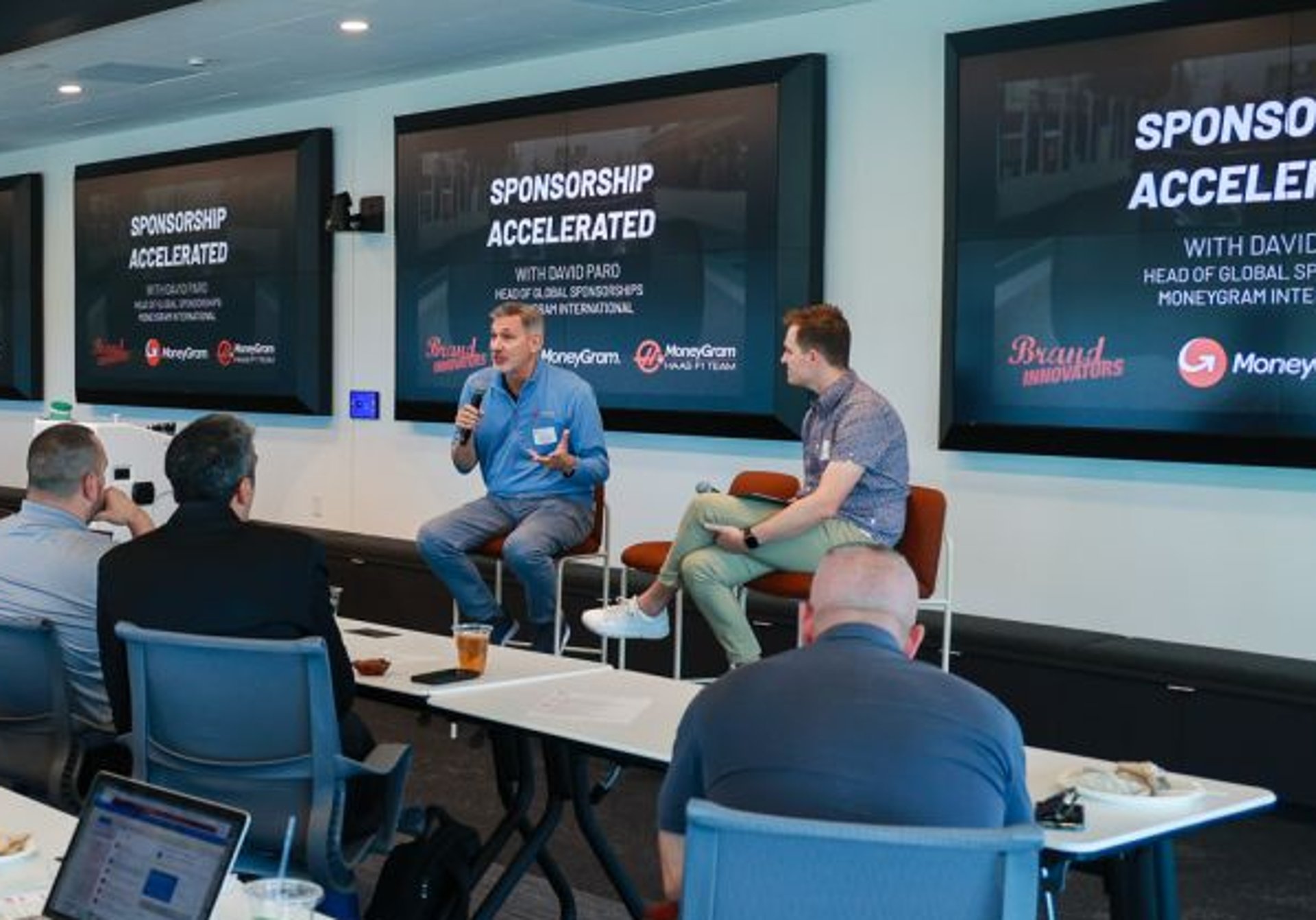
    I was at your presentation yesterday at UNC (I’m the guy that took the picture of you guys at the end) …

    I do not have the same level of experience as you or any of the people running the show in these colleges, but just as a college student looking at these developments, it seems that the vision of four “super-conferences” is nearly inevitable. With the announcement today of ECU trying to join the party and join the Big East, it would seem like the ACC, the Pac-12, the Big East, & the Big 10 are all positioned to be these “super-conferences.”

    Do I think it’s necessarily “right?” Probably not. At the same time, I do not necessarily see any inherent value in having ten or so conferences, with each one having a system where some schools are “haves” and others are “have-nots.”

    Instead, by forming these four 16 team conferences, you can essentially form a system much like the Champions league which basically pulls from major squads in England, Spain, Italy, & Germany (with a few other squads from other countries). This system where the four major leagues are set in just four countries would seem to relate very much to what might be happening in the NCAA in the near future.

    The debate about whether “pay-for-play” is necessary is a whole ‘nother discussion that is pretty hard to answer while being able to answer all the counter-arguments for each side, so I presume that this is an issue that will be strung along for a much longer time.

    Sorry for the long comment.. when it comes to sporting arguments, I find it nearly impossible to give an answer in a short amount of space haha..

    -Tato

    p.s. I do not thing Larry Scott deserves your praise necessarily, since it was the presidents of the other schools who were not willing to bring a school in that had a revenue-making advantage. Scott was more than willing to add Texas, OU, O(klahoma)SU, & TTU to the fold. How everything eventually unfolds will be very interesting to observe!!

  2. Pete says:

    Agree with the premise from your earlier piece (college sports as a marketing vehicle) that smaller companies need to be careful not to overextend their marketing reach. The days of “Food Lion” being the lead sponsor of the ACC Basketball tourney are over…. and I expect the National brands will more than fill the void.

  3. admin says:

    Tato,

    Thanks for the great comment. On a sheer business level, your ideas are sound. I admittedly wrote this largly from the heart. But, I also believe that there is something to a meaningful concept of competition on a more reginal basis. Sure, we could model college football around the NFL or as you say European leagues, but what does that do for other college sports. That is where I struggle. I believe in the mission onf college athletics beyond the dollars and cents. As I see it, the challenge should be how to capitalize on the engine (football) to foster the larger vision. And if we can maintain some individuality and rivalry while remaining true to something larger than the dollar, then I will sign up.

    So, does Texas stay in Big 12 keeping it together or does ACC take them in?

  4. admin says:

    That could be true, but the competition for the national sports marketing dollar among properties is fierce. There are only so many brands that can play on such a stage and the dollars remain tight for all except the most reliable of buys. With that said, college football and the NCAA men’s tourney are among such properties. However, another casualty of this may be the value of the NCAA’s corporate partner program.

  5. Tato says:

    I do think there might be some sort of emotional gap that someone like me, who is just going through the collegiate process, cannot really relate to like you do when you talk about “regional.” If you’re asking me who I’d rather see play within the conference for basketball, between UNC & Pitt or UNC & UVA, on a pure quality of play level, the decision is easy. I did not grow up when every conference was pretty much made up of teams within a pretty close region. Instead, I’m used to teams from Massachusetts & Maryland (BC/U. Maryland) having to play in-conference rivals down in Tallahassee & Coral Gables. This is a very tough debate to talk about without letting your heart get into it though so it’s an issue that will never have unanimity. As for the “dollar” comment, it’s nearly impossible for any decisions within the NCAA to be made without that in mind, which is very sad I think but it’s the truth with almost any business decision nowadays.

    I’m looking forward to the next blog-post though. They stimulate a lot of thought (at least in my opinion).

    -Tato

  6. Tato says:

    That being said, I think that intensity would be higher and fan appeal would be much increased if somehow all conferences could be kept in a strictly regional basis. I don’t know how it would affect recruitment and all that, but keeping teams (for example) in NC, SC, & VA together in one conference, would definitely have it’s values, especially when it comes to road-team attendance. It’d be cool to have the power to blow up all the conferences and start from scratch, haha.

    -Tato

  7. admin says:

    I should note, that I’m not against the “dollar” being a major factor. There’s a market for college sports–at least basketball and football–and I’m not against maximizing revenue. However, the activity of the “college athletic” conferences should still be guided by some overarching concept of what college athletics is supposed to be. I just can’t see how the NCAA and its president feel they can punt on taking a position on this. As I mentioned during my talk to your group, my concern is that the interests of the conferences will take college athletics further away from solving some of the critical issues that need to be addressed.

  8. Tato says:

    Yeah, I totally agree with that. Their main concern seems to be the whole maximizing of revenues without keeping any other issues in mind so that’s kind of lame. It’s all a very messed up system in some regards and I doubt there will ever be a solution that totally works for everyone.

Leave a Reply